
Academics, private companies, journalists, non-government organizations, and government agencies have all made significant contributions to the telecommunications transparency debate in Canada since the beginning of this year. This post briefly describes the most significant contributions along with links to the relevant publications.
Academic Transparency Publications
Several academic groups published reports addressing telecommunications privacy and transparency issues. The Telecom Transparency Project published “The Governance of Telecommunications Surveillance: How Opaque and Unaccountable Practices and Policies Threaten Canadians,” which explored how much telecommunications surveillance occurs in Canada, what actors enable the surveillance, to what degree those actors disclose their involvement in (and the magnitude of) surveillance, and what degree of oversight is given to the federal governments’ surveillance practices. Two other reports, “Keeping Internet Users in the Know or in the Dark: 2014 Report on Data Privacy Transparency of Canadian Internet Service Providers” and “The 3+3 Project: Evaluating Canada’s Wireless Carriers’ Data Privacy Transparency,” analyzed the privacy practices of major Canadian telecommunications providers. The former report evaluated the data privacy transparency of the most significant forty-three Internet carriers serving the Canadian public and ranked the carriers against ten questions. In contrast, the latter report used 10 criteria to evaluate Canada’s three largest wireless carriers and their extension brands to establish how transparent they were about their privacy practices and how they treated subscribers’ personal information.
Corporate Reports and Guidance
A trio of telecommunications companies also released transparency reports in the first half of 2015. WIND Mobile’s Mobile Transparency (2014) revealed a significant decrease in requests for customer name and address information, and a modest increase of emergency response requests combined with an explosion of court ordered/legislative demands requests. TELUS and Rogers also released transparency reports; overall TELUS’ report shows a small decrease in government requests whereas Rogers’ report shows a significant decrease of roughly 60,000 fewer requests. The relative merits of companies’ transparency reports were discussed in the Telecom Transparency Project’s report, mentioned previously. Industry Canada also released transparency reporting guidelines to “help private organizations be open with their customers, regarding the management and sharing of their personal information with government, while respecting the work of law enforcement, national security agencies, and regulatory authorities.” Some thoughts on those guidelines were published by Michael Geist as well as by the Telecom Transparency Project.
Government Investigations into Domestic Data Collection
During this time the Office of the Privacy Commissioner of Canada also audited how the Royal Canadian Mounted Police (RCMP) collected and used subscriber data. This data was obtained from Canadian telecommunications companies. The Office found that, “the RCMP’s information management systems were not designed to identify files which contained warrantless access requests to subscriber information, we were unable to select a representative sample of files to review. Consequently, we were unable to assess the sufficiency of controls that may exist or if the collection of warrantless requests from TSPs was, or was not in compliance with the collection requirements of the Privacy Act.” The challenges experienced by the Office of the Privacy Commissioner of Canada were perhaps unsurprising, given that the RCMP stated in 2014 that they did not have a way of tracking subscriber data requests in response to questions from MP Charmaine Borg.
Signals Intelligence-Related Publications
There have also been a series of contributions that have focused prominently on Canada’s foreign signals intelligence organization, the Communications Security Establishment. Michael Geist’s edited collection, Law, Privacy and Surveillance in the Post-Snowden Era, contains nine contributions grouped into three parts: understanding surveillance in Canada, legal issues, and prospects for reform. In addition to Geist’s collection, two Canadian archives have been created to host Snowden documents. The first, “The Snowden Archives,” is hosted by the Canadian Journalists for Free Expression. The Snowden Archives contain approximately 400 documents and were compiled “to provide a tool that would facilitate citizen and researcher access to these important documents.” The second is the “Canadian SIGINT Summaries” which collate leaked documents that are exclusively linked to CSE’s operations. The SIGINT Summaries identify when the documents were created, provide a summary of the documents themselves, and also include metadata such as length, codenames, and news stories linked with the documents’ publication. Finally, the Canadian Broadcasting Corporation and the Globe and Mail have both published stories based on Snowden documents.
Summary
Overall, there has been an exceptional amount written on telecom transparency issues in Canada. Several transparency reports are expected later this year from Sasktel, MTS Allstream, and TekSavvy. And the Canadian Internet Registration Authority, though its Community Investment Program, is funding projects which will help Canadians request their personal information from public and private organizations alike as well as to help companies develop transparency reports. The coming months promise to continue being busy for transparency in Canada!
Photo Credit: stack by hobvias sudoneighm (CC BY 2.0) https://flic.kr/p/Fecq6
This post first appeared at the Telecom Transparency Project website.
 I’ve had a book chapter, titled “Beyond ATIP: New Methods for Researching State Surveillance,” published in Access To Information And Social Justice: Critical Research Strategies for Journalists, Scholars, and Activists. The book was edited by Jamie Brownlee and Kevin Walby and is available for purchase at a variety of brick and mortar, as well as online, book vendors. The book combines political and practical aspects of Access to Information and Privacy (ATIP) research in a single volume. In addition to exposing how ATIP-related documents have led to major, nation-affecting, news stories the book helps Canadian citizens use and navigate the federal access to information processes.
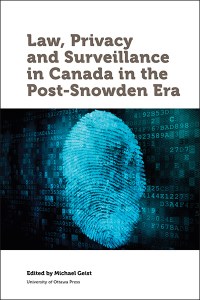 Earlier this year I had a book chapter, titled “Stuck on the Agenda: Drawing Lessons from the Stagnation of “Lawful Access” Legislation in Canada” published in Law, Privacy and Surveillance in Canada in the Post-Snowden Era. The book was edited by Michael Geist and is
 Andrew Hilts and I have released a new paper that is titled “
 American and British officials have been warning with an increasing sense of purported urgency that their inability to decrypt communications could have serious consequences. American authorities
  Technology, Thoughts & Trinkets